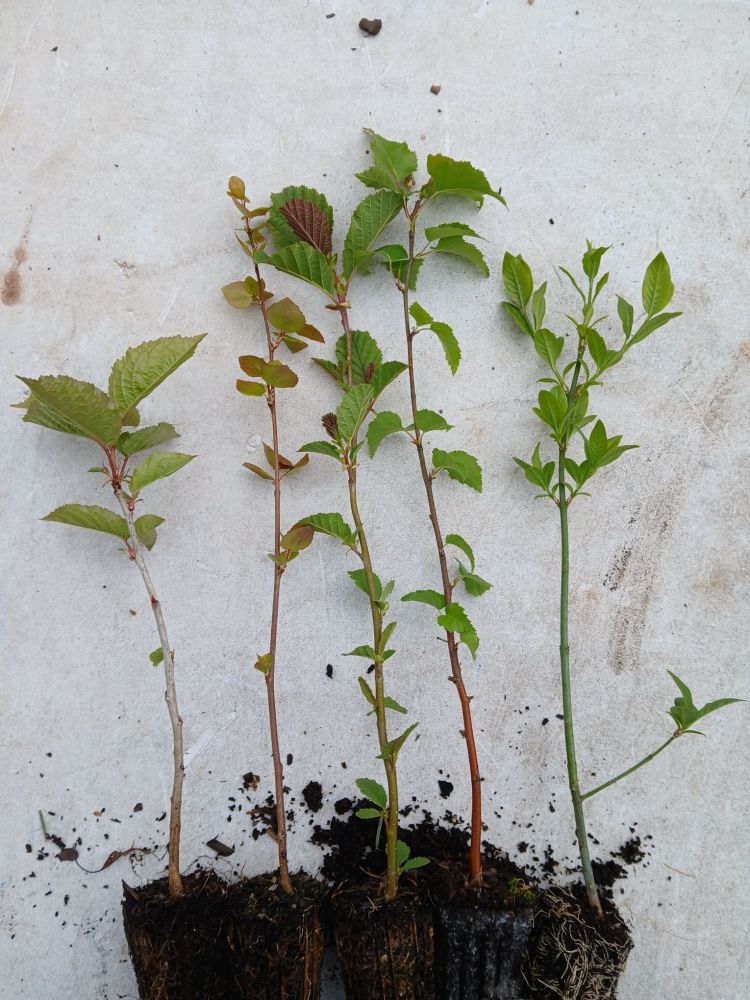
We start off our cell-grown trees in the polytunnels, providing a controlled environment until the trees attain a sufficient height and girth. Subsequently, they are relocated outside to acclimatize to the elements.
The advantage of Cell Grown trees is that they can be planted over a much longer season, extending beyond the traditional planting window. This means that they can be better established in warmer soil and more favorable weather conditions compared to the normal planting season, which typically runs from November to April.
By extending the planting season, these trees benefit from the growing conditions available in late spring and early summer, which can significantly enhance their growth potential.
The roots are contained in the cell, where they are protected by compost, which prevents damage and drying out during transport and initial planting. This unique containment method helps ensure that the trees adapt more easily to their new environment as they establish themselves.
They are really easy to plant, as they keep the compact shape of the cell, allowing for straightforward and efficient planting techniques. Additionally, because of the intact root systems, a high level of established trees can be achieved, which not only contributes to the overall success of tree planting initiatives but also supports local ecosystems. This ease of planting makes it particularly beneficial for inexperienced planters and volunteers .
 Heydon Hill Tree Nursery